Reviews and occasional notes on classical music

Reviews and occasional notes on classical music

"Music, both vocall and instrumental, so good, so delectable, so rare, so admirable, so super excellent, that it did even ravish and stupifie all those strangers that never heard the like." - Thomas Coryat, after hearing 3 hours of music at the Scuola di San Rocco in Venice, 1608.

Saturday, January 19, 2019

Moving homages to Brahms


Brahms-Schoenberg: Piano Quartet in G minor; Hubert Parry: Elegy for Brahms

How do we see Arnold Schoenberg? Has he been forever obscured, overtaken, by his twelve-tone system? Is there a human being under that forbidding mask of theory? There certainly is one here in the "Blue Self-Portrait"; apparently his missing left ear is an homage to Vincent Van Gogh, who he admired immensely.
'Blue Self Portrait' by Arnold Schoenberg
Do we need a musical gateway to humanize the great composer, and bring him out from under the weight of his mighty theories? I'm not sure we still do, for I feel his music sounds different, much more accessible, in the 21st century than it did in the 20th; but if we do then his clever arrangement of Brahms's G minor Piano Quartet is just the ticket. Schoenberg takes apart the gorgeous and rich but somewhat murky chamber work, like an intricate pocket watch, polishing each tiny piece and rebuilding the whole thing as a beautiful grandfather clock. There's probably more Schoenberg here than there is Brahms, just as there's more Villa-Lobos than Bach in the Bachianas Brasileiras, but it's a surprisingly playful Schoenberg, and certainly a more human Schoenberg, than one would expect from listening to most of his music.

The resulting work is an orchestral showpiece, to be sure, but to play it only as such is to miss many felicities in the scoring. The conductor must be careful not to be too prodigal with Schoenberg's flourishes, holding something back for the climaxes and paying attention to the unfolding of Brahms's musical arguments. The players of the Gavle Symphony Orchestra are having fun here, and I think Jaime Martin does a more than passable job in reigning everything in. It becomes a moving homage from one composer to another, each of them on a different side of a historical and a musical abyss.

When Hubert Parry heard that Johannes Brahms had died in 1897 he stopped everything and began work on his Elegy for Brahms, a 12-minute symphonic movement. It's an appealing tribute, partly because of its quotations from Brahms' music, but mainly because it eschews the lugubrious. This is more like a eulogy with light-hearted anecdotes about the loved one that has the funeral crowd smiling and chuckling. There's an added layer of melancholy, though, that comes when you learn that the Elegy wasn't performed until it was played at Parry's own memorial service in 1918. Sir Adrian Boult made a lovely recording of this piece in December 1966. "Boult makes this Elegy shine in a golden aureole which celebrates Brahms rather than laments him," according to Rob Barnett. While the final sheen of the London Philharmonic Orchestra and the gravitas of the great old conductor is missing from this performance, the Swedish players and their young Spanish conductor do a creditable job here. This is a highly recommended

This album will be released on February 8, 2019.

Wednesday, January 16, 2019

High above, on a better star


Heimweh: Schubert Lieder

From Pentatone Classics comes this very special package, with an amazing cover photo by Julia Wesely, the profound musical concept and an arresting liner notes essay by Anna Lucia Richter, and the gorgeous music making of Richter, pianist Gerold Huber and clarinettist Matthias Schorn. Not to forget the greatest song-writer in history, Franz Schubert, a brilliant curator of poetry and the ultimate melder of words and music.

"We are torn between nostalgia for the familiar and an urge for the foreign and strange," says Carson McCullers. "As often as not, we are homesick most for the places we have never known." The German words for these two feelings are Heimweh, a kind of homesickness, and Hinausweh, or wanderlust. Schubert, a master of the emotional landscape as much as the musical one, weaves strands of both throughout his songs, and Richter has gathered some of the best for this project. We begin with the heartbreaking simplicity of An den Mond, D. 259, a Goethe setting from 1815. In her liner notes Doris Blaich calls Heimweh, D. 456, from the following year, "one long musical sigh." The lyrics, by Theodor Hell, are a special expression of nostalgic feelings.
Often, in quiet, solitary hours,
I have experienced a feeling,
inexplicable, marvellous,
like a yearning for the far distance,
high above, on a better star,
like a soft presentiment.
Schubert turns the emotional level way up in the late Totengräbers Heimwehe, D. 842, a setting of Jakob Nikolaus from 1825. In this song "The stars vanish – My eyes close in death," an unflinching look into the abyss!

The programme ends with Der Hirt auf dem Felsen, D. 965, a melding of two poems by Wilhelm Müller and Karl August Varnhagen, written in October 1828. This concert aria shifts the spotlight from the relatively intimate lieder to something which points to a more theatrical future, which alas was not to be. The song was published posthumously, after the composer died that November.
My sweetheart lives so far from me,
Therefore, I long so to be with her
Over there.
Music wouldn't be the same without this yearning, from the lonesome cowboy to the saudade of Fado and Tom Jobim, from singin' the blues to Judy Garland's yearning for home in The Wizard of Oz. This album is a distinguished addition to the genre.


This disc will be released on February 1, 2019.

Friday, January 4, 2019

Music from the shadows


Alberto Nepomuceno: Symphony in G minor, Prelude to O Garatuja, Serie Brasileira

The Villa-Lobos Shadow in Brazilian classical music is wide, and long, and very dark. It reaches forward from the intimidating bulk of the great composer's works, but it also reaches into the past, obscuring the music of fine, or at least respectable, composers who went before. But now, to shine some light on composers in this shadow, we have an exciting new Naxos series called The Music of Brazil, made possible by the Brazilian Ministry of Foreign Affairs project Brasil em Concerto. We can look forward to more releases from the Minas Gerais Philharmonic Orchestra, as well as the Goiás Philharmonic Orchestra and the São Paulo Symphony Orchestra (OSESP), from a label that has already done so much for Brazilian classical music.

Alberto Nepomuceno is a good composer to begin with: born twenty-three years before Villa-Lobos, he left behind his beginnings in the North-Eastern cities of Fortaleza and Recife for more sophisticated musical surroundings, first in Rio de Janeiro, and then for an extended stay in the European capitals of Rome, Berlin, Vienna and Paris. A progressive in politics as well as art, Nepomuceno worked tirelessly, often behind the scenes, on behalf of new trends in music, but it was Villa-Lobos who gained much of the credit as the foremost home-grown musical modernist. In a coup of self-promotion and clever branding, Villa-Lobos stood virtually alone as the representative of music at the Semana de Arte Moderna in São Paulo in 1922. At that point, unfortunately, Nepomuceno had been dead for nearly two years, though surely more room could be made in the story of avant garde Brazilian music for someone who had translated Schoenberg’s Theory of Harmony into Portuguese in 1916, teaching it at his National Institute of Music.

Which brings us to the music on the present disc. There is lots of well-crafted, pleasant music here, substantial enough to make careful listening worth your while, with occasionally something special.  While I was re-listening to Nepomuceno's G minor Symphony I had a flash-back to some music I had heard earlier in the day on my car radio (on KING-FM), Johan Halvorsen's Symphony no. 1 in D minor. Both had a pleasing, light, Tchaikovskian sound, and I wasn't at all surprised to see that both composers were born in the same year, 1864, though the Brazilian symphony was written in 1893, thirty years before its Norwegian counterpart. It's the beautiful slow movement of this symphony which represents perhaps the peak of Nepomuceno's orchestral music, under the influence, I would guess, of music by composers such as Puccini and Leoncavallo, but prefiguring works by Elgar and Richard Strauss.

Fabio Mechetti and the Minas Gerais Philharmonic provide really excellent playing, with especially strong string sections. Their version of the G minor Symphony is vastly better than the other version I've heard, by the Orquestra Sinfonica Brasileira under Edoardo de Guarnieri from 1958. This is a strong start for the Naxos series, and I look forward to upcoming releases!

This disc will be released on February 8, 2019.

A Brazilian composer you must know

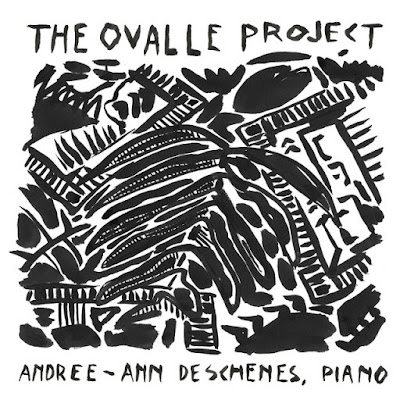
The Ovalle Project: works for piano by Jayme Ovalle

The Brazilian composer Jayme Ovalle is a close contemporary of Heitor Villa-Lobos; he was born seven years after, and died four years before his much better-known compatriot. Like Villa-Lobos, Ovalle wrote a great deal of music for the piano throughout his career, and this splendid two-CD set by Andree-Ann Deschenes (whose Villa-Lobos I praised in 2017) shows Ovalle deserves a place amongst the great Brazilian composers for the piano, a group that also includes Camargo Guarnieri, Chiquinha Gonzaga and Ernesto Nazareth. But Ovalle is more like Chopin than the musical polymath Villa-Lobos; nearly everything he wrote was either a song or a piano piece.

But Ovalle's trajectory in music is similar to Villa-Lobos's in a number of other ways. Both melded erudite and popular styles, and combined Brazilian traditions of salon music with up-to-date European modernism, especially influenced by Debussy, Ravel and Satie. Like Villa-Lobos, Ovalle spent a good deal of his time outside of Brazil, in Europe and New York, and shared a cosmopolitan outlook that's often reflected in his music. Deschenes has chosen works that show the many facets of Ovalle's music, from Nazareth-style pieces in maxixe and choro styles, to characteristic, folk-like tunes reminiscent of Villa's Guia prático, and finally to more complex works like the splendid Third Lengenda. This collection has immediate appeal, with its lovely melodies and captivating rhythms, but it rewards close listening as well. Playing with intense virtuosity and cool control, Deschenes has done Ovalle and Brazilian music a great service with this project. Very highly recommended!

This review also appears at The Villa-Lobos Magazine.


Debussy with fire, wit and a touch of swing


Piano works by Debussy, Faure and Ravel
Under the alternating fires of two spotlights, a very young man, with troubled eyes and flaming hair, was seated before the black mass of a piano. And, alone, confronting a considerable public, delirious or collected, and who filled the vast ship of the room of the Opera of the Champs-Elysees.
This spectacle still besets my memory.
- Henry Malherbe
The very young man was Marius-Francois Gaillard, and he was in the midst of playing the complete piano works of Claude Debussy, spread over three concerts in March 1922. In 1928, 1929 and 1930, French Odéon recorded a significant subset of Gaillard's Debussy, enough to fill a generous CD, and spill over onto a second. This is outstanding playing; though the sound is of course thin and restricted, there is a full palette of tonal colour. Gaillard supplies fire, wit and just a touch of swing, rare in a Debussy performance from any period, but a revelation if you haven't heard this marvellous music played in such a way. This is a recording to listen to while reading Proust, and drinking vintage French champagne, preferably the 1985 Krug Brut, if you have any left in your cellar.


APR Recordings fills the second CD with more marvellous piano playing from the 1930s, by Carmen Guilbert. Recorded by Pathé well after the Gaillard, the sound isn't as life-like, but her playing of Debussy, Faure and Ravel still communicates musicality and authenticity through the hiss and cramped acoustic. Such a fine release!

Wednesday, December 5, 2018

Top Ten Discs for 2018

Welcome to my fourth Top Ten Discs post for Music for Several Instruments. Here is last year's, the list from the year before, and the one from 2015.


Delicacy and intricacy in a vast expanse


The third release in Aleyson Scopel's complete recording of Almeida Prado's masterwork Cartas Celestes. I've chosen this disc for my Top Ten for its variety, but the last disc in the series is also from 2018, and is also very fine.


The best introduction into Pettersson's dark & serious world


Christian Lindberg continues on his way to a new complete Pettersson symphonies cycle for BIS, for The Allan Pettersson Project 2013-2019, a joint project with the Norrköping Symphony Orchestra.


More great Bacewicz from The Silesians, with Friends


The Silesian Quartets complete Bacewicz String Quartets release was on my list of Top Ten Discs of 2016, and this disc continues the high quality (as, indeed, does the composer).


Schubert in the style of Kubrick


The Trio Vitruvi's passionate, controlled performance of Schubert's late Piano Trio was a highlight of chamber music recordings in 2018. In my review I go off on a cinematic tangent.


The secret of wonderment


Leif Ove Andsnes brings "surprise and delight" to these great works by Chopin, just what the doctor - and André Gide - ordered.


Bjorn Schmelzer brings his speculative musical-historical approach to English music of the late 15th and early 16th century, once again combined with the highest levels of both music and recording technology. The result is stunning.


Fade to black...


This is the very last release in Masaaki Suzuki's magisterial Bach cantatas series with the Bach Collegium Japan. Man, it's hard not to give out one of my Top Ten places just for that. But this isn't an Al Pacino/Scent of a Woman situation here; this gorgeous disc is a good as anything in the entire series.


Music of complexity & gravitas from the 20th and 21st century


Music about the natural world, human connections and the theatrical and creative experience, by one of the greatest living composers, Kaija Saariajo. Violinist Jennifer Koh shines, and has superb support from the musicians of the Curtis 20/21 Ensemble.


Singing about the dark times


Rory McCleery demonstrates that at least some of these musical laments are more than personal declarations of grief or devotional works, but also political statements, and even underground expressions of activism against the rule of the Spanish Habsburgs in Portugal. A superb disc from The Marian Consort.


À la recherche du temps perdu


Charles Owen's two-disc set of Brahms late piano music is a nuanced and deeply moving portrayal of a great composer looking back over a lifetime of creativity, love and friendship, while always pushing ahead with music of increasing complexity, profundity and grace.

A Christmas gift, for next year


Telemann: Christmas Oratorios

This disc came just in time for Christmas; for me, that is. Unfortunately for you, though, it has a release date of January 4, 2019. So you'll need to remember this review for next Christmas, and definitely buy or stream this marvellous music next year. In the three oratorios on the disc Telemann has added operatic flourishes to his cantata style, and turned up the footlights to express himself dramatically. This is really impressive music even today; I can hardly imagine its effect in the Hamburg Cathedral on successive Sundays during the Advent season. The cantata Und das Wort ward Fleisch is also richly ornamented, and includes a lovely interlude: the ancient song In dulci jubilo.

This music is newly discovered, and recorded for the first time, which I find astounding. Is it possible that there's even more spectacular music like this still waiting for first performances and recordings? Alexander Willens has done a spectacular job in presenting Telemann's music, and works by many other Baroque composers, with his amazing Kolner Akademie and superb soloists. Once again CPO provides excellent recordings and complete documentation for music of the very highest quality. This is a Christmas gift that's so good it will still be outstanding next year!