Reviews and occasional notes on classical music
"Music, both vocall and instrumental, so good, so delectable, so rare, so admirable, so super excellent, that it did even ravish and stupifie all those strangers that never heard the like." - Thomas Coryat, after hearing 3 hours of music at the Scuola di San Rocco in Venice, 1608.
Tuesday, September 17, 2019
Beethoven for the Big Year
Beethoven: Complete Piano Sonatas
Next year Beethoven fans around the world will be celebrating the 250th Anniversary of the composers birth, on December 16, 1770 (or the 17th; Charles Schulz makes reference here to the uncertainty about the actual date).
I'm planning a full year of merrymaking in 2020, but it never hurts to get a good head-start for this, and here we have a marvellous project to get the festivities rolling. Igor Levit's complete Beethoven Piano Sonatas are full-blown masterpieces of the art of performance and recording. In the three op. 2 sonatas Levit sets the perfect tone. The 25-year-old composer is attempting to make his first piano sonatas much grander than his models, mainly Haydn, and he worked hard to present his music in a completely assured way. And surprisingly he very nearly succeeds. There's a certain coltish awkwardness in these early sonatas, though, that Levit underlines in an appealing way. The Adagio of the 1st Sonata is charming, but also more than a bit sentimental, and Levit is engaging as he shows Beethoven, not for the last time, exposing very personal feelings, in this and all the storm and stress of these works. This
Sony released the late sonatas (op. 101 to op. 111) back in 2013, when Levit was only 25 himself. These are astonishingly performances, so far removed from any youthful callowness, or any lack of nuance or indeed the spiritual component of these great works of art. With their complete context in place - all 27 sonatas written before 1816 - these five sonatas seem even more impressive as part of the complete set.
It's hard to believe that the Beethoven Bicentennial was 50 years ago. In 1970 I began my serious introduction to classical music, with the DGG set of 85 LPs arriving in the mail, 5 discs every month, via Time-Life. The great Wilhelm Kempff played the piano sonatas; it was the perfect way to listen closely to this music for the first time.
I was, and am today, completely won over by Kempff's measured approach and a deeply humanistic feeling that seems very much to be a fellow-feeling with Beethoven himself. Igor Levit seems to be very much there in Kempff's court, along, perhaps, with Alfred Brendel in between. The many times I've listened to Levit's Beethoven in the past month is just a start; I'm sure I'll be listening just as carefully, and appreciating his artistry, throughout the Big Year, and beyond.
Sunday, August 25, 2019
The grand gestures of Telemann
Georg Philipp Telemann: The Grand Concertos for Mixed Instruments
I don't think there's a composer who has moved up more in my estimation in the past decade than Georg Philipp Telemann. The great CPO series from Michael Schneider and La Stagione Frankfurt has been a major factor in this process. Like Bach, Telemann is a great synthesizer of pan-European styles; besides the French and the Italians, Swedes, Germans and Danes, amongst others, show up in his various orchestral, chamber music and concerted works. He's also a master of the grand gesture, very much like his close friend Handel. The "grand concertos" in this collection are superb examples of a master completely secure in his abilities, extending his brand through a complete re-shuffling of instrumentation.
Telemann was only able to present the concertos that sprang from his apparently unlimited imagination because he had access to superb instrumentalists. And that goes for the musicians of La Stagione Frankfurt, in spades. This music seems effortless - it sort of floats through the speakers - but on listening closely, you realize how difficult are the virtuoso lines and the questions of tempo, balance and intonation. Michael Schneider has perfectly judged the style of this music, allowing the music to shine. This is completely secular music, but these performances bring out an almost religious, or at least spiritual, feeling.
This album will be released on September 6, 2019
Saturday, August 17, 2019
Shimmering, shining Vivaldi
Vivaldi Con Amore: Concertos
This is the first Tafelmusik album under Music Director Elisa Citterio, who in 2017 replaced Jeanne Lamon, the only other Music Director the orchestra has had since its inception in 1981. It was recorded at Toronto's Humbercrest United Church on the Tafelmusik Media label. When run properly, the orchestral-led label can be a real plus, with recording, marketing and musical issues all under the control of the same organization. From the evidence of the past few releases, I would judge Tafelmusik Media a big success, much like another of my favourites, Seattle Symphony Media. We have here a bright, clean, open auditory experience to go along with a similar interpretation of Vivaldi's marvellous music. "Sparkling" has been a word that keeps coming up in reviews of Tafelmusik performances under Citterio, and it's a hallmark of the new disc as well. Though always solid, I've found Tafelmusik was getting just a tiny bit routine in its performances in this century, as it was passed by hot new groups like Il Giardino Armonico, and, in Canada, by Arion Baroque Montreal. But Vivaldi's marvellous music shimmers and shines here, and this bodes well for this great institution of Canadian culture.
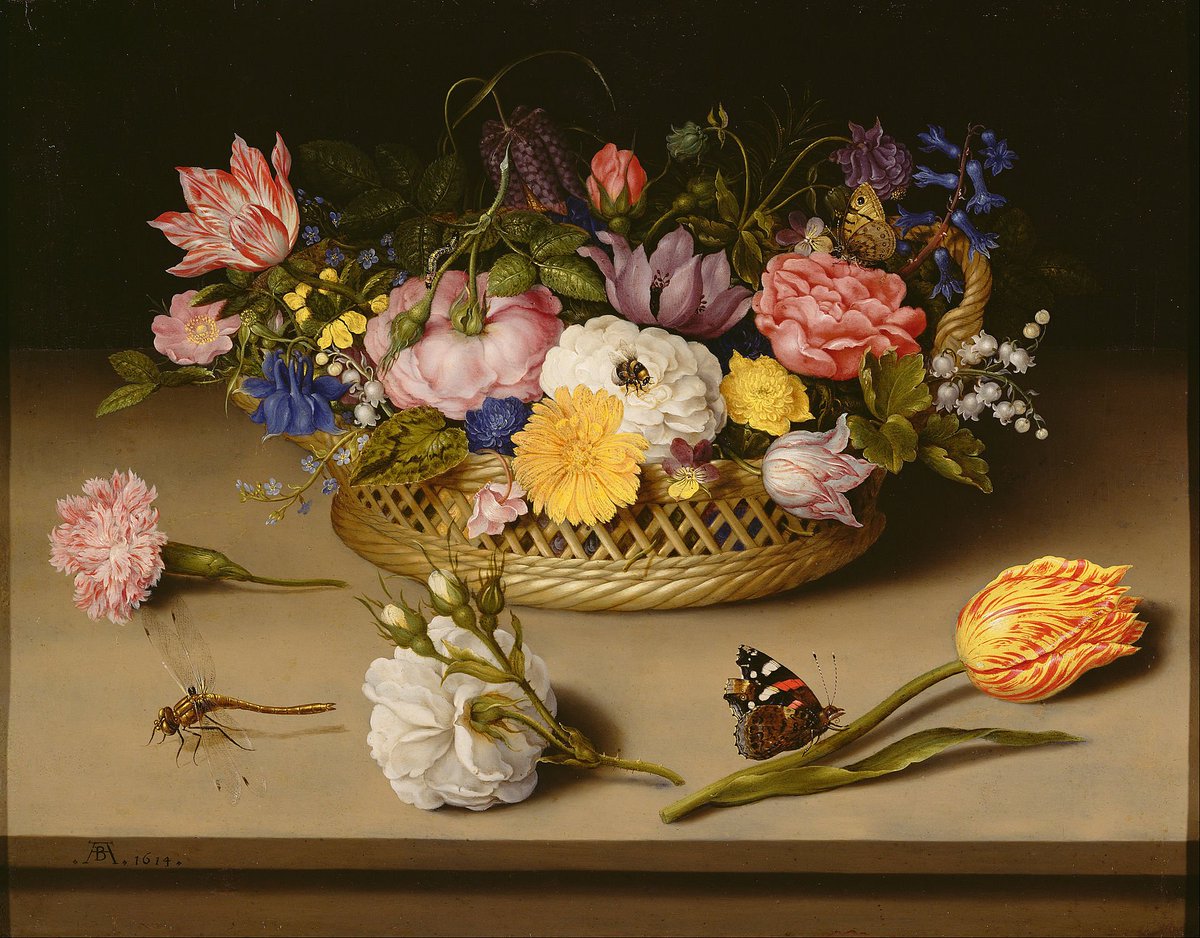
Speaking of marketing, I love the design of this album. The cover photo, by Michael Barker, is in the great tradition of the Dutch flower still life, like this one by Ambrosius Bosschaert at the Getty Museum, painted in 1614. The two flower pictures together are a good illustration of, and analogue for, Historically Informed Practice.
This album will be released on September 20, 2019
Thursday, August 8, 2019
A strong, atmospheric, Villa-Lobos program
Heitor Villa-Lobos: Lenda do Caboclo, Próle do bébê No. 2 (excerpts), Choros No. 5, Bachianas brasileiras No. 4, Valsa da dor, Ciclo brasileiro (excerpts), Poema singelo
It's great to see a new Villa-Lobos disc; there's been a significant drop-off in recording activity in the years leading up to 2019, the 60th anniversary of the Maestro's death. Villa's piano repertoire is a major strength of his catalogue, reflecting both his modernist and nationalist tendencies. Though no virtuoso pianist himself, the composer was very close to some of the greatest pianists in Brazil and Europe: Rubinstein, Blumenthal, and Novaes, among many others. And we have a wide range of superb recordings available, from pianists like Nelson Freire, Marc-André Hamelin, Sonia Rubinsky and Marcelo Bratke. This is a well-chosen program from the Washington D.C. based Jason Solounias, though I would have preferred that he include the entire Ciclo brasileiro (the great Dance of the White Indian is missing). Many single-disc piano programs include Choros no. 5, Bachianas Brasileiras no. 4, and the Valsa da dor, but it's good to see some pieces from the 2nd Book of the marvellous Próle do bébê, which isn't as well known as the 1st.
I was quite impressed with the playing throughout; the tricky rhythms are solid, and there's a real sense of atmosphere that goes with Villa-Lobos's various landscapes: for example, the scrubland of Brazil's north-east in the Festa no sertão from the Ciclo brasileiro, and the Canto do sertão from BB#4. In the latter movement, very few pianists (or conductors in the orchestral version) play the insistent note of the Araponga percussively enough for my taste - they should listen to the call of the bird itself. Hit those B-flats harder! This performance of the lovely Valsa da dor is full of grace and style; Solounias plays the piece with sentiment but without sentimentality.
I enjoyed the liner notes, which include a fascinating conversation between Solounias and pianist Jose Ramos Santana, though there were a few points I disagreed with. I won't bore you with those here. Okay, maybe just one! Ramos Santana posits that "The older [Villa-Lobos] got, the music becomes more dense and complex." Though there's obviously no simple trajectory, I would think that in terms of complexity Villa's piano music peaked early, with Rudepoema and Próle do bébê (both of which were published in 1921). When the composer returned from Brazil and undertook his folkloric research and educational responsibilities, and a more nationalistic tone, his music becomes more popular and accessible (and easier to play!) This process played out in the 1930s, and you can hear it here in the Bachianas and the Valsa da dor.
This is a very promising beginning, and I look forward to future albums from Jason Solounias. Any repertoire would be great, but I would suggest Rudepoema, one of the greatest 20th century works for the piano. And, oh yes!, The Dance of the White Indian.
This album will be released on September 6, 2019
This review is also posted at The Villa-Lobos Magazine.
Tuesday, August 6, 2019
Another winner from the Emerald City
Langgaard: Prelude to Antichrist; Strauss: An Alpine Symphony
"When the centre of gravity of life is placed, not in life itself," says Nietzsche in The Antichrist, "but in 'the beyond'—in nothingness—then one has taken away its centre of gravity altogether." Both Richard Strauss, whose Alpine Symphony, written in 1915, was a musical gloss on Nietzsche's work, following the similar Also Sprach Zarathustra of 1898, and Rued Langgaard, whose opera Antichrist was written in 1920-21, built their works on the idea of a more elemental life force, though Langgaard's own connection to the Antichrist was as much a musical attraction to Richard Strauss and Carl Nielsen as it was a philosophical one to Nietzsche.
"Did we notice how much music can free the spirit? Give wings to thoughts?", Nietzsche wrote in The Case of Wagner, "That, the more a musician we are, the more a philosopher we become?" At one time Nietzsche's idol was Wagner, but in Nietzsche Contra Wagner, his last work before his final madness, he rejects Wagner's music because of what he saw as a move towards Christianity by the composer. He called it "A Music Without A Future". So it makes a certain amount of sense to take the idea of the Antichrist, and using a post-Wagnerian, neo-Romantic musical style that rejects the modernism that both Strauss and Langgaard initially espoused, express Nietzsche's ideas in musical form. You don't need to agree with, or even try to understand, Nietzsche's concepts to appreciate this music. Both works are completely, ravishingly, beautiful, and ravishingly played by the great Seattle Symphony under Thomas Dausgaard. Elemental life forces are as well portrayed by the great orchestral works of Richard Strauss as they are by anyone or anything. Meanwhile, Rued Langgaard's strikingly original music, forged between his twin influences of Strauss and Nielsen, creates music of enormous power and beauty.
Thomas Dausgaard performed the premiere of Antichrist in Copenhagen in 2002. Besides Strauss and Nielsen, this Prelude also reminds me of Hans Pfitzner's three preludes to Palestrina, written in the same year, 1915, as An Alpine Symphony. By the way, this performance of the Antichrist Prelude is a world premiere of the original version of the piece. At more than 12 minutes, it's more compelling as a stand-alone concert piece than the six-minute operatic prelude Dausgaard performed as part of his 2006 recording of the complete opera from Copenhagen.
This is music that plays to the strengths of the Seattle Symphony: rich and powerful brass, sumptuous strings, lithe and subtle woodwinds, everything ready for Dausgaard to put together into a rich orchestral tapestry. The recordings were made from live concerts in 2017 (Strauss) and April, 2019 (Langgaard), and the sound is of the highest quality, which we've come to expect from these Seattle Symphony Media recordings. Another absolute winner from the Emerald City.
This album will be released on September 13, 2019
Authentic Holst & Elgar from Bergen
Holst: The Planets; Elgar: Enigma Variations
The presentation of Edward Elgar's Enigma Variations in 1899 single-handedly destroyed a stereotype about Un-Musical Britain. It was a new masterwork of orchestral music for the 20th Century, and it was followed in 1916 by another: Gustav Holst's The Planets. Both are now staples of the orchestral repertoire around the world, though perhaps not as totally beloved as in Britain, with its flag-waving Proms audiences. It's instructive, then, to see how many great recorded performances come from outside of the UK: Montreal, Chicago, Berlin, Vienna, to name a few. Andrew Litton, who has made memorable recordings of the Holst from Dallas, and the Elgar from London, provides a musically flawless and authentic performance of both from Norway, with the very fine Bergen Philharmonic Orchestra. So often used as demonstrations of high-end audio, these two works both sound very good, partly because of the BIS engineers, but let's face it, both composers wrote this music to sound good! I should mention that I listened to the stereo version, but I'm sure the surround-sound one is awesome.
A masterpiece of emotional intimacy
Boccherini: Stabat Mater
The original 1781 version of Boccherini's Stabat Mater, in which a soprano voice is accompanied by a string quintet, is a masterpiece of emotional intimacy. In a new disc from Spain, the fine soprano Anaïs Oliveras and five talented string players have the measure of the dramatic story of grief Boccherini crafts from his very personal adaptation of the 13th/14th Century poem by Jacopone da Todi. Boccherini's own model is Pergolesi's great version of the Stabat Mater, from 1736; I wonder if he also knew Bach's transcription, set to the words of Psalm 51. Pergolesi's intense pathos shifts slightly in Bach's version, which often emphasizes the mystery of the Crucifixion. Boccherini includes both in his version; his version of the section which I find most affecting:
Vidit suum dulcem natum
Morientem desolatum
Dum emisit spiritum.
She sees her dear Sonseems naïvely simple at first, but Boccherini twists the knife each time the soprano repeats the last line. The effect is devastating, and it's more effective since it isn't overplayed by the musicians.
dying in anguish,
as he gives up the ghost.
This is as good a version as I've heard of this great piece (which I vastly prefer to the more complex version with two singers that Boccherini adapted in 1800), though there's a minor issue here that might cause some to look to other versions. Unlike most (but not all) other recordings, there is no additional music beyond the Stabat Mater, which lasts less than 40 minutes here. A Boccherini String Quartet or Quintet, even a Symphony, is included in some; sacred works by other composers are added in others. This is a question, though, of quantity only; quality is not in question.
Subscribe to:
Posts (Atom)